Why weight matters for pugs
Pugs are food-motivated and can easily become overweight. Extra weight puts strain on their joints, heart, and already-compromised airways. Keeping your pug at a healthy weight is one of the most important things you can do for their quality of life.
This guide covers what a healthy pug should weigh, how to manage their diet, and how to tell if your pug needs to lose a few pounds.
Weight Guide
What should a healthy pug weigh?
You may see pug weight ranges like 6.3 kg to 8.1 kg online, but in reality this is a myth – body condition is far more accurate than a number on the scales. Every pug is built differently, and what's healthy for one may not be for another.
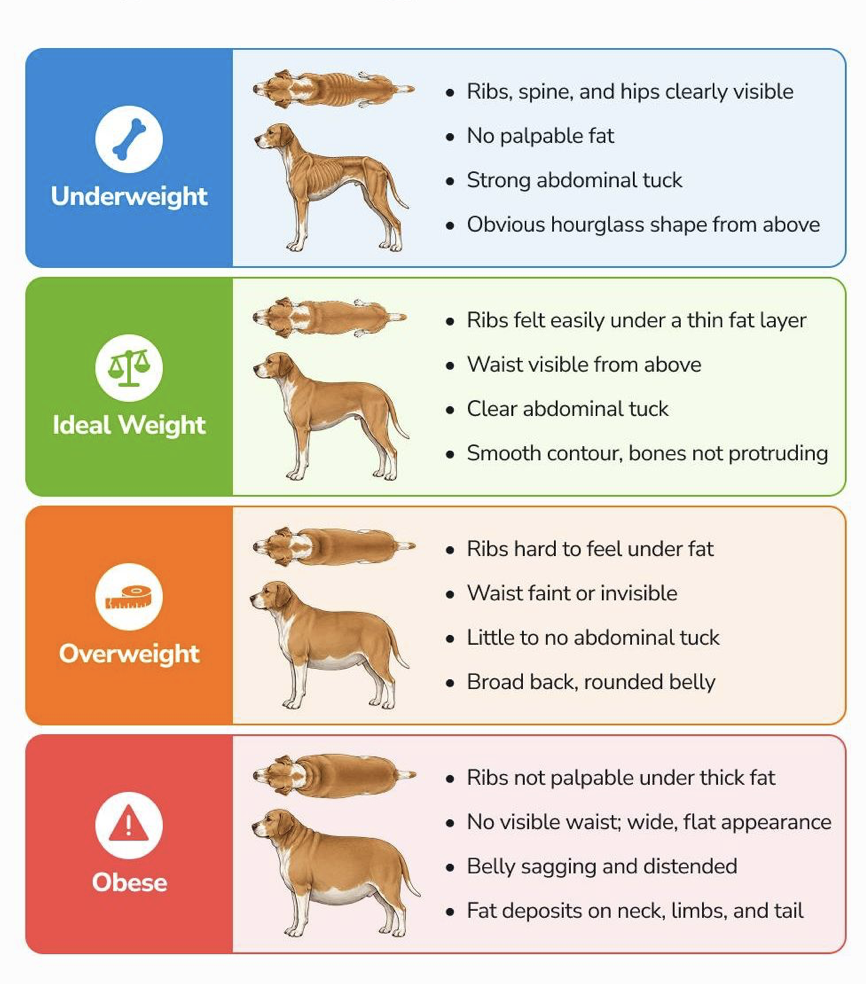
Use the body condition score (BCS) instead: you should be able to feel your pug's ribs without pressing hard, they should have a visible waist when viewed from above, and a tummy tuck when viewed from the side. This is a far more reliable way to assess your pug's health.
How to tell if your pug is overweight
- Can't feel the ribs without pressing firmly
- No visible waistline – the body looks oval from above
- No tummy tuck when viewed from the side
- Reluctance to exercise or tiring quickly on walks
- Difficulty grooming or reaching certain areas
- Breathing more heavily than usual during mild activity
Body condition signs
A good body condition score is the best way to monitor your pug's weight. Here is what to look for at each stage.
Underweight: ribs, spine and pelvic bones are visible from a distance. No body fat is palpable. Obvious loss of muscle mass.
Ideal weight: ribs are easily felt without excess fat covering. Waist is visible from above. Abdomen is tucked up when viewed from the side.
Overweight: ribs are difficult to feel under a moderate to thick fat covering. No visible waist when viewed from above. Abdomen hangs down or appears rounded.
Safe weight loss tips
- Measure food portions accurately – don't guess or free feed
- Reduce treats or switch to low-calorie options: carrot sticks, green beans, cucumber, apple slices (no seeds)
- Use a slow feeder bowl to prevent eating too quickly
- Split daily food into two smaller meals to help manage hunger
- Keep a food diary for two weeks to spot hidden calories
- Weigh your pug monthly and track changes with photos from above and the side
- Involve your vet – they can help set a target weight and a safe weekly loss goal
Feeding and treats
Choosing the right food is just as important as how much you feed. A good quality complete dry or wet food formulated for small breeds is ideal. Look for named protein sources and avoid fillers.
Treats should make up no more than 10% of your pug's daily calorie intake. When training or rewarding, use tiny pieces of low-calorie options like cucumber, carrot or a single piece of their daily kibble allowance.
Avoid giving table scraps, human food, and high-fat treats. Foods like cheese, sausages and processed meats are far too rich and calorie-dense for pugs.
Exercise without overdoing it
Pugs need regular but gentle exercise. Aim for 20 to 40 minutes of walking per day, split into two shorter walks to avoid overheating or over-tiring them.
Indoor games like hide and seek, gentle fetch, or puzzle toys can burn calories without straining their breathing. Swimming can be a good option for pugs who enjoy water, but always supervise closely.
If your pug is severely overweight, start with short 5 to 10 minute walks and build up gradually. Avoid walking in hot weather – pugs overheat quickly due to their flat faces. Walk early in the morning or late in the evening during summer.
Frequently Asked Questions
What is the ideal weight for a pug?
Most healthy adult pugs weigh between 6.3 kg and 8.1 kg. Males tend to be heavier than females. However, build varies, so use the body condition score – you should be able to feel your pug's ribs without pressing hard, and they should have a visible waist.
How much should I feed my pug?
This depends on the food type and your pug's age, weight, and activity level. As a general guide, most adult pugs need around 100–150g of high-quality dry food per day, split into two meals. Always check the feeding guide on your food and adjust based on your pug's condition.
What are healthy treat alternatives for pugs?
Good low-calorie options include carrot sticks, green beans, cucumber slices, apple pieces (no seeds), and frozen blueberries. Always introduce new foods gradually and in moderation.
How fast should my pug lose weight?
Slow and steady is safest. Aim for around 1–2% of body weight per week. Rapid weight loss can cause health problems. Your vet can help you set a realistic target and check that there aren't underlying issues like an underactive thyroid.
How much exercise should an overweight pug get?
Start gently with two 5–10 minute walks per day and build up gradually to 20–40 minutes total. Avoid hot weather, watch for heavy breathing, and stop if your pug lags behind or lies down. Indoor games and puzzle toys are great low-impact alternatives.
Is weight management food worth it?
Yes – many weight management formulas contain fewer calories, higher protein to maintain muscle, and added fibre to help your pug feel full. Speak to your vet before switching food, especially if your pug has other health conditions.
The content on this page is for educational and informational purposes only. It is not a substitute for professional veterinary advice, diagnosis or treatment. If you are concerned about your pug's health, always consult a qualified veterinary surgeon.